


Free Retro Template
Run better sprint retros with a ready-made Asana template that helps your team capture feedback, assign action items, and improve every sprint.
Sign up to use this template.
Free Retro Template
Run better sprint retros with a ready-made Asana template that helps your team capture feedback, assign action items, and improve every sprint.
Use templateSign up to use this template.
INTEGRATED FEATURES
Recommended apps



![[Old Product UI] Sprint retrospective Kanban board example (boards)](https://assets.asana.biz/transform/a14c0f16-c538-4768-a908-fd8739e9f5f9/inline-agile-sprint-retrospective-2x?io=transform:fill,width:2560&format=webp)
Summary
A sprint retrospective is one of the most valuable meetings in the Agile process, but only when it's structured well. Without a clear agenda and a way to follow up on feedback, retrospectives can lose focus and fail to drive real improvement. This guide covers why retrospectives matter, how to run them step by step, and the different formats you can try with our free sprint retrospective template in Asana.
Tips and ideas for sprint retrospective meetings
A sprint retrospective template is a reusable structure that helps Agile teams organize feedback, track action items, and improve their process after every sprint. Research shows that only half of retrospective action items actually get completed, underscoring the importance of using a structured template and a work management platform to track follow-through and accountability. By using our sprint retrospective template to track discussion topics and actionable to-dos, your team can continuously improve without reinventing the wheel (or sticky notes).
Give structure to your retrospective. It can be easy to get off track when discussing sprint feedback. With our sprint retrospective tools, your team has a clear schedule to guide the meeting. View the template in Boards, a Kanban-style view, and answer questions about what went well, what didn't, and what's coming next.
Take action on insights. Retrospectives are all about improving processes and future work. Our sprint retrospective template makes it easy to create and assign action items and follow-up work, ensuring ideas don't slip through the cracks, even if you’re on a remote team.
Save time and iterate. To run a good sprint retrospective, you need to create repeatable processes without reinventing the wheel every time. With our sprint retrospective template, your team has a format to build off of. That way, you can easily standardize your agenda and update the retrospective project template as time goes on.
Why run a sprint retrospective?
Sprint retrospectives give your team a dedicated space to pause, reflect, and improve. Without them, problems tend to repeat, and small frustrations build up over time.
Drive continuous improvement. Each retrospective is a chance to identify what's working and what isn't, so your team can make adjustments before the next sprint begins.
Strengthen team communication. Retrospectives create a safe environment for honest feedback. When team members feel heard, trust grows and collaboration improves.
Increase accountability. By assigning clear action items during the retrospective, your team takes ownership of improvements and follows through on commitments.
Prevent recurring issues. When you regularly review what went wrong, you can address root causes instead of treating the same symptoms sprint after sprint.
Boost morale. Celebrating wins is just as important as addressing challenges. Retrospectives give your team a moment to recognize progress and appreciate each other's contributions.
How to run a sprint retrospective
A well-run retrospective follows a clear structure, so your team can move from reflection to action. According to recent Scrum research, the average sprint retrospective lasts 1 hour and 11 minutes, with only about 7% exceeding 2 hours. Many teams opt for shorter sessions between 10 and 45 minutes. Whether you're new to Agile or a seasoned Scrum Master, these five steps will help you facilitate a productive session.
Here's a quick overview of the five stages:
Set the stage: Create a safe, open environment for discussion.
Gather data: Collect observations on what went well and what didn't.
Generate insights: Identify patterns and root causes as a team.
Decide on actions: Choose specific improvements and assign owners.
Close the retrospective: Summarize key takeaways and confirm next steps.
Here's how to put each step into practice:
Set the stage. Start by welcoming your team and setting expectations for the meeting. Remind everyone that the goal is to improve as a team, not to assign blame. A quick icebreaker or check-in can help people feel comfortable sharing openly, and get you to an action plan even faster.
Gather data. Review what happened during the sprint. Use your sprint retrospective template to organize feedback into clear categories so nothing gets overlooked.
Generate insights. Once you've collected feedback, dig deeper. Ask your team why certain things went well or poorly. Look for patterns and root causes rather than surface-level observations to make real process improvements.
Decide on actions. Narrow your list of insights down to a few specific, achievable improvements for the next sprint, then turn them into an action plan. Assign each action item to a team member with a clear deadline so there's accountability.
Close the retrospective. Wrap up by summarizing the key takeaways and action items. Thank your team for their input and confirm how you'll track follow-through in the next sprint.
Running your retrospective in Asana makes it easy to assign action items, set due dates, and track progress, so your team's insights turn into real improvements.
Types of sprint retrospectives you can run with Asana
Keeping your retrospectives fresh helps your team stay engaged and share better feedback (even if it’s anonymous feedback). Here are some popular formats you can run using our template
Read: Scrum template to plan backlogs, sprints, and retrospectivesWhat went well, what didn’t, what’s next
Your team reflects on successes, challenges, and upcoming priorities. This format works well for teams that are new to retrospectives.
Start, stop, continue
Team members identify things they should start doing, stop doing, and continue doing. This format works well for teams that want a simple, action-oriented retro.
4Ls retrospective
Your team reflects on what they liked, learned, lacked, and longed for during the sprint. This format works well for broader reflection.
Mad, sad, glad
Team members share how they felt during the sprint, which can surface emotions and concerns that may not come up in a task-focused retro. This format works well for teams that want more honest dialogue.
Sailboat retrospective
The sailboat represents your team, the wind shows what moves the team forward and what it should keep doing, while the anchors show what holds the team back. This format works well for teams that prefer a more visual, creative retro.
Get started with your sprint retrospective template
Empower your Agile team with the tools they need to succeed before, during, and after a sprint. With our free sprint retrospective template, you can structure your meetings, capture feedback, and assign action items all in one place.
Get started with our sprint retrospective template today and turn every retrospective into an opportunity for your team to grow.
Use templateFAQs about sprint retrospectives
A sprint retrospective is a meeting held at the end of a sprint period where Agile teams evaluate their sprint and make improvements for the next one. It's part of the Scrum process, which traditionally includes two-week sprints that have both planning and retrospective components.
The purpose of a sprint retrospective is to give your Agile team a dedicated space to share what went well, what didn't, and what to improve for the next sprint. It helps teams continuously refine their processes and stay aligned on priorities. Learn more about Asana for Agile and Scrum.
Your sprint retrospective should be held between the end of your sprint and the beginning of your next sprint planning. Sprint retrospectives should take place at the end of each sprint cycle, which ideally lasts 14 days or less, with 7- or 14-day sprints being the most commonly recommended cadences. Ideally, don't let too much time pass between the end of your sprint and your retrospective, so your team still has a fresh take on what went well and what can be improved.
The five steps of an Agile retrospective are: set the stage, gather data, generate insights, decide on actions, and close the retrospective. Each step builds on the last to help your team move from open reflection to concrete improvements for the next sprint.
The Scrum Master typically facilitates the sprint retrospective, but any team member can take on the role. Some teams rotate the facilitator to keep retrospectives fresh and give everyone a sense of ownership.
Related templates
![[Templates] Web Design Process (Card image)](https://assets.asana.biz/transform/91cfb3ee-da0a-44d4-82a4-3cc08d1d6451/TG23-web-thumbnail-035-changelog-static-2x?io=transform:fill,width:2560&format=webp)
![[Agile Daily Standup] template Card Image](https://assets.asana.biz/transform/0df37b8d-d69a-42af-b4ac-c0fc41658276/TG23-web-thumbnail-019-weeklytodo1-static-2x?io=transform:fill,width:2560&format=webp)

![[Templates] Software and System Deployment (Card image)](https://assets.asana.biz/transform/8b9bb024-d81b-48ec-8cd8-148453823fbe/software-and-system-deployment?io=transform:fill,width:2560&format=webp)
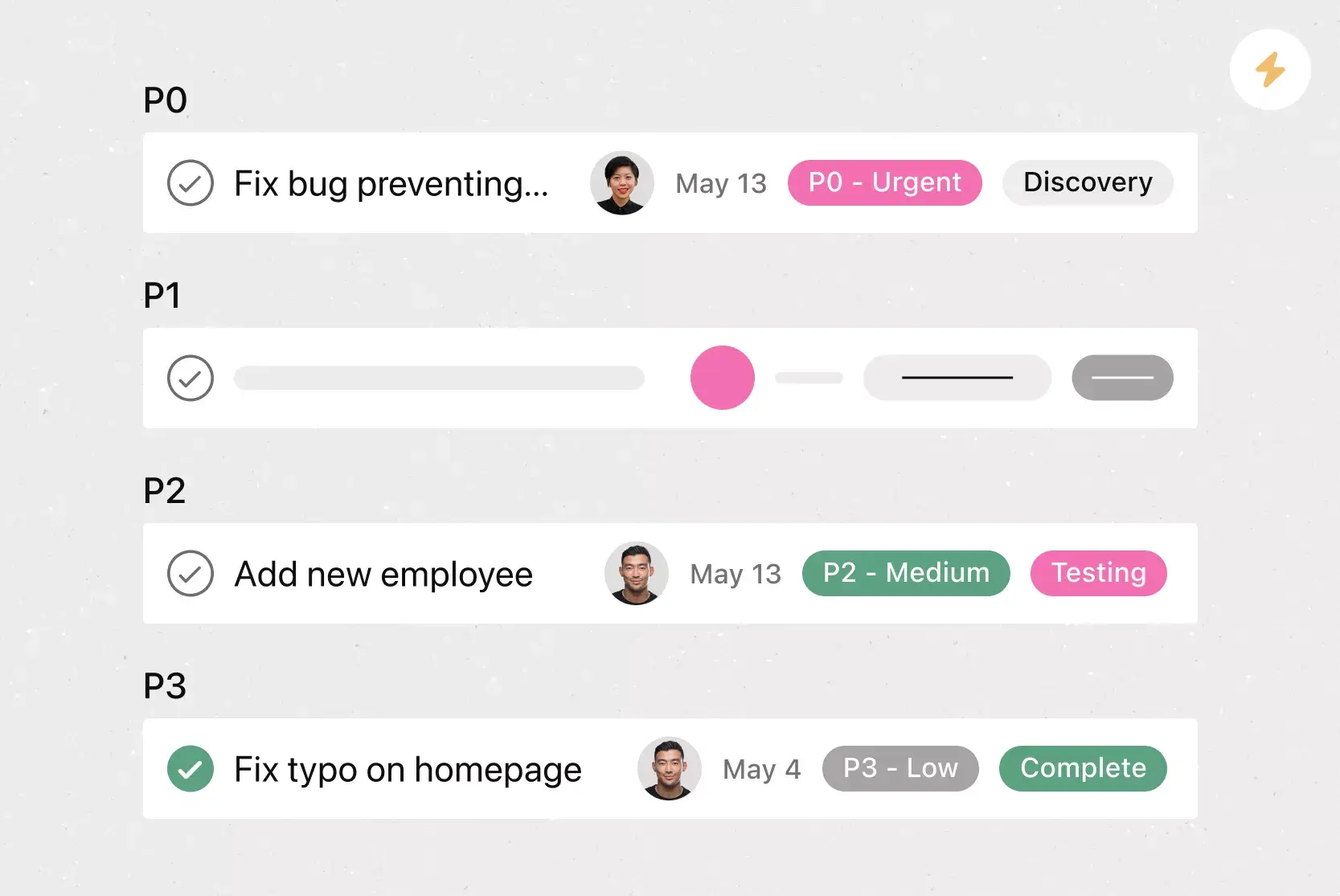

Stronger sprints with Asana
Teams turn to sprints to work more efficiently, and can work 45% more efficiently with Asana.